






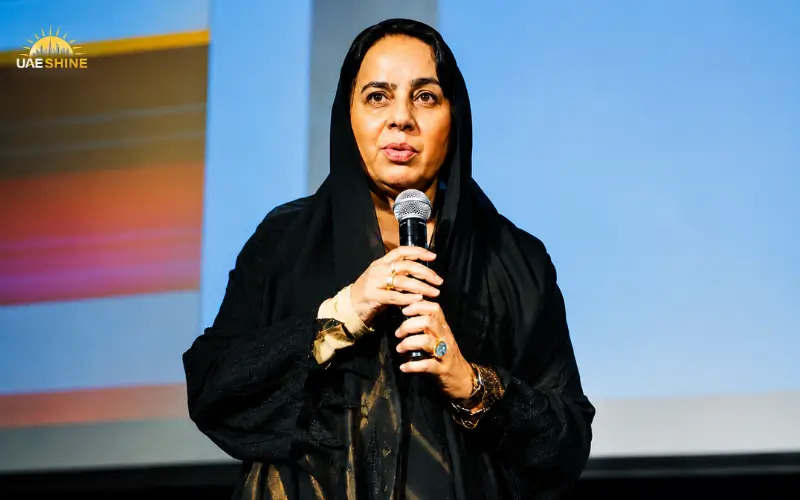
Ousha Al Suwaidi is one of the most renowned names in Emirati literature and is a legend in the field of Nabati poetry. Her remarkable talent and unique style in her writing helped to sustain the cultural heritage and poetic tradition of the United Arab Emirates. She became an admirer across the Arab world with her poems on the themes of love, wisdom, faith, and national identity. Respected as Fatat Al Arab (Girl of the Arabs), her literary works continue to be read, admired, and studied. Her legacy has been honored in various forms, from cultural institutions pointing to her works to her achievements being recognized in academic circles and even honored by a Google Doodle created in her memory.
Ousha Al Suwaidi: Quick Facts
| Attribute | Details |
| Full Name | Ousha bint Khalifa Al Suwaidi |
| Birth Year | 1920 |
| Birthplace | Al Ain, UAE (then Trucial States) |
| Death Date | 27 July 2018 |
| Age at Death | 98 years |
| Nationality | Emirati |
| Profession | Nabati Poet |
| Literary Genre | Nabati Poetry |
| Honorary Title | Fatat Al Arab (Girl of the Arabs) |
| Google Doodle Recognition | 28 November 2022 |
| Primary Language | Arabic |
| Legacy | One of the UAE’s most celebrated Nabati poets |
| Official Organization | Ousha Foundation |
Who Was Ousha Al Suwaidi?
Ousha bint Khalifa Al Suwaidi hails from a family with a passion for literature and poetry and was born in Al Ain in 1920. Her childhood was in a poetic tradition, and this was a tremendous foundation for her career.
In her youth, she heard great poets and memorized verses from classical poetry and became an extraordinary lover of language. At age fifteen, she had already been recognized for reciting her own poetry publicly, an amazing feat for a time when poetry was largely a man’s domain.
Her confidence, literary ability, and unique style solidified her place as one of the most established emerging poets in the Gulf region.
Early Life and Literary Influences
Ousha’s childhood was an important part of her becoming a poet.
Her family fostered an appreciation of literature and the expression of eloquent Arabic. This was an environment that exposed her to classical Arabic poetry and local traditions from an early age, the latter being known as Nabati poetry.
Among the classical poets that she was influenced by were:
- Al-Mutanabbi
- Abu Tammam
- Al-Ma’arri
She was also fond of and reverent of Nabati poets such as:
- Al Majidi bin Thahir
- Rashid Al Khalawi
- Saleem bin Abdul Hai
- Mohsin Hazzani
These influences enabled her to integrate traditional poetic excellence with true Emirati cultural experiences.
Understanding Nabati Poetry
To understand Ousha Al Suwaidi’s significance, it is important to understand the concept of Nabati poetry.
Nabati is a traditional and vernacular style of Arabic poetry, which emerged throughout the Arabian Peninsula. Nabati is not like classical Arabic poetry, in which the poems are written in spoken dialects of the local community and retain sophisticated poetic structure and imagery.
It outlines the following themes:
- Love
- Honor
- Tribal values
- Nature
- Faith
- Patriotism
- Wisdom
- Desert life
Ousha built the foundations of raising the status of Nabati poetry by adding more emotion, beautiful language, and views that align with Emirati traditions and values, yet keep the poetry grounded in the realities of women.
Her Unique Poetic Style
Ousha’s distinctive literary voice has been a reason for her work to be influential.
She didn’t just use pretty words, but a combination of elegance and clarity. Her poems often included rich imagery of the Arabian desert, the sea, traditional Emirati living, and human relationships.
Her poetry shares some common features, which are:
- Rich symbolism
- Emotional sincerity
- Strong rhythm
- Cultural authenticity
- Philosophical reflections
- Spiritual devotion
- Memorable metaphors
Her poetry was accessible enough to appeal to both literary scholars and the common man without sacrificing its artistic tone.
Themes Found Throughout Her Poetry
During her career, Ousha delved into many themes.
Love
Several poems are expressions of love, yearning, appreciation, and emotional strength.
Wisdom
Her poems often inspire thoughtful, patient, generous, and moral attitudes.
Patriotism
She was an early champion of the Emirates’ landscapes, traditions, and identity, well before cultural protection became a national priority.
Nostalgia
Many poems are nostalgic for the past and hold on to the values and traditions of Emirati society.
Faith
The love for religion is present in her works; she has composed poems of praise for Prophet Muhammad (peace be upon him), which are considered one of her most important compositions by the official Ousha Foundation.
Why She Became Known as Fatat Al Arab
Early in her poetic career, Ousha became known as Fatat Al Khaleej (Girl of the Gulf) for her incredible poetic talent.
Later, His Highness Sheikh Mohammed bin Rashid Al Maktoum honoured her with the even more distinguished title Fatat Al Arab (Girl of the Arabs), and she participated along with His Highness in poetry events. The title was a recognition of her literary prowess, as well as her impact on the Arab world.
It has since come to be known as her legacy, and it has been used in many literary references.
Influence on Emirati Literature
Ousha Al Suwaidi rose to the fore, and public poetry was still mostly male.
Her success proved that women were capable of being prominent literary voices and faithful to the cultural traditions of the Arabs.
Her accomplishments encouraged many Emirati women to compose poetry, publish literary works, and take part in cultural events.
Many modern female poets recognize her as a pioneer in the opportunities she gave to women in Arabic literature.
Her Contribution to Emirati Culture
Ousha’s work was more than just poetry; it was a record of the traditions and identity of the Emirates.
Her poems contain valuable information on:
- Traditional lifestyles
- Family values
- Desert heritage
- Social customs
- Historical experiences
- National identity
Her poetry is literature and history for researchers of Emirati cultural heritage.
Major Achievements and Recognition
Ousha Al Suwaidi was recognized for her exceptional role in the poetry of the Nabati minority and in Emirati culture throughout her life. Her command of traditional poetic structures and her incorporation of themes and expressions that were understandable to modern readers were admired by literary critics.
She had a strong impact beyond the UAE. Her work was loved by poetry lovers in the Gulf Cooperation Council (GCC) countries, and many of her poems were recited in cultural festivals, literary events, and education programs.
She has accomplished the following:
- One of the first and most influential female poets of the UAE, Nabians.
- Writing a substantial amount of poetry that remains read and appreciated.
- Earning the title Fatat Al Arab (Girl of the Arabs) from Sheikh Mohammed bin Rashid Al Maktoum for her literary skills.
- Inspiring Emirati and Gulf poets to come, especially women.
- Her work is preserved and promoted through the Ousha Foundation, which was started to protect her literary heritage.
These achievements made her a part of modern Emirati literature.
Read Also: Sheikh Zayed Road, Dubai
Ousha Al Suwaidi and the Google Doodle
The most notable international recognition of Ousha Al Suwaidi was when Google created a regional Doodle for her in November 2022 to honor her life and literary works.
The Doodle was a tribute to her lasting legacy in Arabic poetry, and her legacy was brought to millions of people. It was also a symbol of the increased worldwide recognition of Emirati cultural personalities and their contributions to world literature.
Google chose her because of her outstanding contributions to Nabati poetry and preserving the linguistic and cultural heritage of the Arabian Peninsula.
The honour boosted her visibility in the international world and was an eye-opener to many readers who went on to learn about Emirati poetry for the first time.
The Ousha Foundation
To ensure that her literary work would continue to live on, the Ousha Foundation was founded to record, promote, and pass on her poetry to the generations to come.
The foundation’s activities include:
- Keeping her original manuscripts.
- Research about Nabati poetry.
- Planning cultural and literary activities.
- Promoting Emirati heritage.
- Making educational material available regarding her life and her poetry.
The official archive is one of the most reliable sources of information regarding her biography, poems, and contributions to Emirati literature.
Why Her Poetry Still Matters Today
Poems by Ousha Al Suwaidi are still relevant in 2018, even though she died that year.
Her work resonates with modern-day readers due to its depictions of common human experiences, while maintaining authentic Emirati identity. Themes of dignity, compassion, love, faith, patience, and belonging are carried across generations.
Her poems have been quoted in:
- University research.
- Arabic literature courses.
- Cultural exhibitions.
- Poetry competitions.
- Heritage festivals.
- Academic publications.
Ousha’s poems, unlike those of many poets from the past who do not resonate in contemporary ears, are emotionally clear and culturally relevant.
Literary Characteristics That Set Her Apart
Ousha is one of the poets who excelled at writing Nabati poetry, and critics have praised his work as being balanced between classicism and regionality.
Several features make her work unique:
Powerful Imagery
Her poems bring the desert, palm trees, traditional homes, and seasons to life for the reader to visualize Emirati life.
Emotional Authenticity
She did not use excessive emotion or exaggeration to make her poetry ‘lasting’ and was a true and honest poet.
Classical Inspiration
She wrote in the Nabati Arabic script, but her work shows a deep awareness of classical Arabic literature.
Strong Musical Rhythm
Her verses are known for their rhythm and rhyme, which are suitable for recitation, an integral part of Nabati poetry.
Cultural Preservation
Her poetry has captured practices, values, and lifestyles that would otherwise remain out of the collective consciousness.
Such attributes are the reasons why her work is still studied today, decades after it was written.
Ousha Al Suwaidi’s Lasting Influence on Women Writers
One of the things Ousha did best was to show that literary excellence did not require a woman.
In the early 20th century, there were few opportunities for women to become publicly known as poets. Even so, she made her mark through her work and garnered the admiration of luminous writers.
Many Emirati women were encouraged by her success to go into careers in:
- Poetry.
- Literature.
- Journalism.
- Cultural studies.
- Academic research.
She is now considered a pioneer whose work led to an increase in possibilities for women in Gulf literature.
Interesting Facts About Ousha Al Suwaidi
- From an early age, she started writing poetry.
- She emerged as one of the most respected poets of Nabati poetry.
- Her poetry is a mixture of traditional Emirati culture and timeless human themes.
- She became ‘Fatat Al Arab’ (queen of the Arabs) due to the influence she wielded throughout the Arab world.
- In 2022, Google honored her with a region-specific Doodle.
- The Ousha Foundation is still continuing to carry on her literary legacy.
Conclusion
To say that Ousha Al Suwaidi is one of the most influential figures in the Emirati literary world is an understatement. She has maintained the rich heritage of Nabati poetry and boosted the cultural identity of the United Arab Emirates. The versification of her timeless lines resonates with the values and heritage of Emirati society, with messages of love, wisdom, patriotism, and faith that continue to inspire readers. She has secured her place in the pantheon of the Arab world’s greatest poets through her outstanding works and via the honorific name Fatat Al Arab.
Her contributions to the country and the world are paralleled by the creation of the Ousha Foundation and Google’s Doodle of 2022. In modern times, her legacy is preserved in her poetry, which is an invaluable asset for all those interested in Arabic literature, Emirati history, and the power of poetry.
Read Also: Sheikh Ammar Bin Humaid Street
Frequently Asked Questions
Who was Ousha Al Suwaidi?
Ousha Al Suwaidi was a Nabati poet in the UA,E born in 1920. She is believed to be one of the most significant literary figures in the history of the United Arab Emirates and is popularly known as Fatat Al Arab.
Why is Ousha Al Suwaidi famous?
She is known for her outstanding Nabati poetry, her impact on Emirati literature, and her poetry heritage in UAE culture.
What type of poetry did Ousha Al Suwaidi write?
She was an expert in the art of Nabati poetry, a traditional genre of Arabic poetry composed in the local dialects but with high-levepoeticry structures.
What does Fatat Al Arab mean?
Fatat Al Arab means “Girl of the Arabs. An honorary title awarded to Ousha Al Suwaidi by Sheikh Mohammed bin Rashid Al Maktoum for her literary accomplishments.
Why did Google honor Ousha Al Suwaidi?
Google featured her in a regional Doodle in November 2022 to celebrate her outstanding contribution to Arabic literature and Nabati poetry.
How did Ousha Al Suwaidi influence Emirati literature?
Ousha Al Suwaidi continued the legacy of Nabati poetry and influenced many Emirati poets, particularly women. Her work is still significant to the literary legacy of the UAE.
Where can I learn more about Ousha Al Suwaidi?
Learn more from the Ousha Foundation, which preserves her poetry, biography, and literary legacy.