
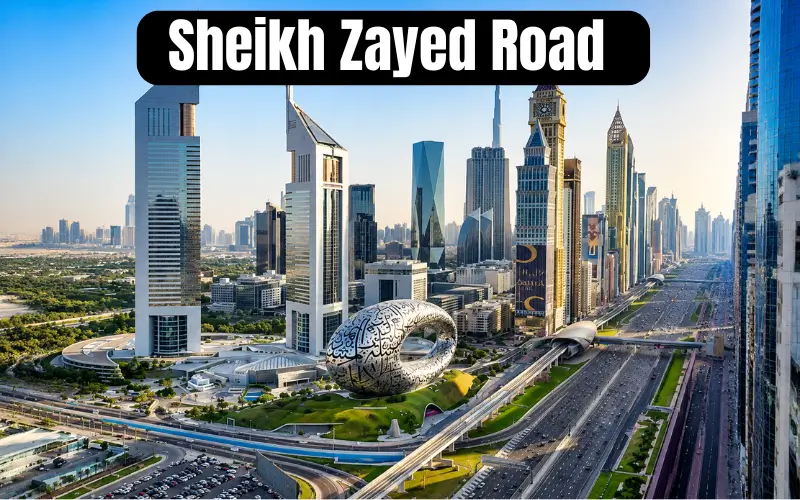
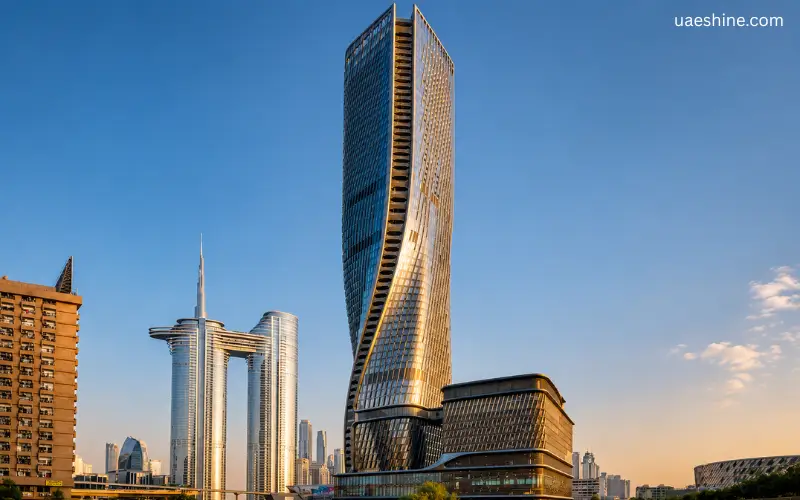
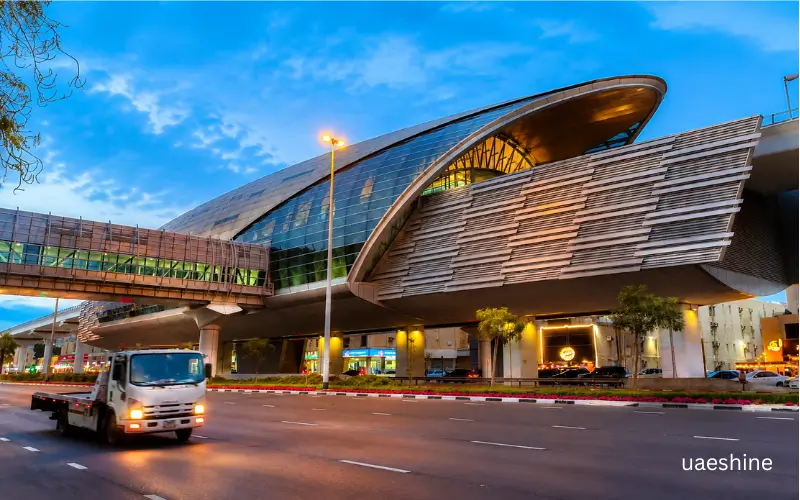

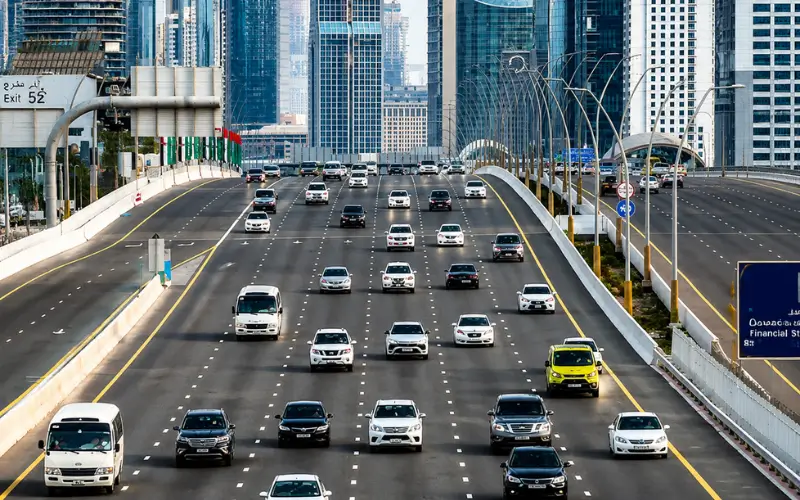
Sheikh Zayed Road is Dubai’s primary corridor of highways, connecting Dubai’s business districts, residential communities, shops, and attractions. When traveling by car, you cut down time and potential pitfalls when staying in hotels and also refer to an apartment. There’s one road in every city that can tell the story. That road in Dubai is Sheikh Zayed Road. Its length is a road trip through the history of the past fifty years of Dubai! It flows through a stretch of two-lane desert road before heading for the eight-lane freeway that now marks the path of the emirate’s largest towers, banks, and hotels.
Quick Facts
| Detail | Information |
| Highway code | E11 |
| Local name | Sheikh Zayed Road (SZR) |
| Named after | Sheikh Zayed bin Sultan Al Nahyan, the UAE’s founding president |
| Dubai stretch | Trade Centre Roundabout to Jebel Ali, ~55 km |
| Full E11 length | ~558 km, Al Silah (Abu Dhabi border) to Ras Al Khaimah |
| Construction started | 1971, as “Defence Road” |
| Main construction finished | 1980 |
| Renamed/extended | 1990s |
| Official E11 status | 1995 |
| Toll gates on this stretch | 3 — Al Barsha, Al Safa North, Al Safa South |
| Managed by | Dubai’s Roads and Transport Authority (RTA) |
Sheikh Zayed Road Location and Map
The E11 highway Dubai route, from Trade Centre Roundabout near Zabeel, is Sheikh Zayed Road, which extends to Jebel Ali at the Abu Dhabi border.
It winds through Downtown Dubai, Business Bay, DIFC, Al Safa, Al Quoz, Al Barsha, Dubai Internet City, and Dubai Marina. The Dubai Metro Red Line follows the entire route, which on a map is the easiest route to visualize in terms of stations, taking the shortest route, from Trade Centre to Jebel Ali.
When looking for the map of the Sheikh Zayed road on Google Maps or any navigation tool, simply search for E11 or Sheikh Zayed road. The name change is fitting in the sense that most applications refer to it as a single route, but it is a multi-segment one, with the new names.
Why Sheikh Zayed Road Confuses First-Timers
It’s not one neighborhood, it’s “Sheikh Zayed Road.” A stretch of 55 km between at least 6 very diverse districts. Some hotel bookings that include the “Sheikh Zayed Road” may refer to a hotel located within five steps from Dubai’s Burj Khalifa. Or it could mean you’re closer to Dubai Marina, 20 minutes away by car.
Several Sheikh Zayed Road hotels apply their name to their listings for SEO purposes. Be sure to book the correct area before you leave!
When dealing with bookings on or close to any SZR, find out which district or interchange it is near. These areas local people refer to are Trade Centre, Al Safa, Al Barsha, and Dubai Internet City.
From Sand Track to Skyline
The road did not come into place before its construction, and thus, travelling from Dubai to Abu Dhabi used to involve a visit through the open desert. The drivers just drove into the tracks that were left by vehicles that preceded them.
- In 1971, after the UAE was established, a proper carriageway was started. It was called Defence Road at the time.
- It gradually branched out until it was open in 1980. The road for the first 10 years passed through virtually empty areas.
- The renaming was to come later. The width of the road and its length were increased by about 30 km between 1993 and 1998.
- It was officially renamed in memory of the founding President of the country on Sheikh Zayed Road. In 1995, the road got its official classification as E11.
- That was a tie-in to the national road number system in all seven emirates. Dubai World Trade Centre, which was finished in 1979, was the only building on a vacant area for a year and a half before people moved in.
- It was after these things were erected that one saw everything – DIFC, Emirates Towers, Burj Khalifa, etc. It was predominantly from the late 1990s onwards.
However, since then, Dubai’s zoning policy has more or less dictated development to extend upwards along one corridor rather than outwards.
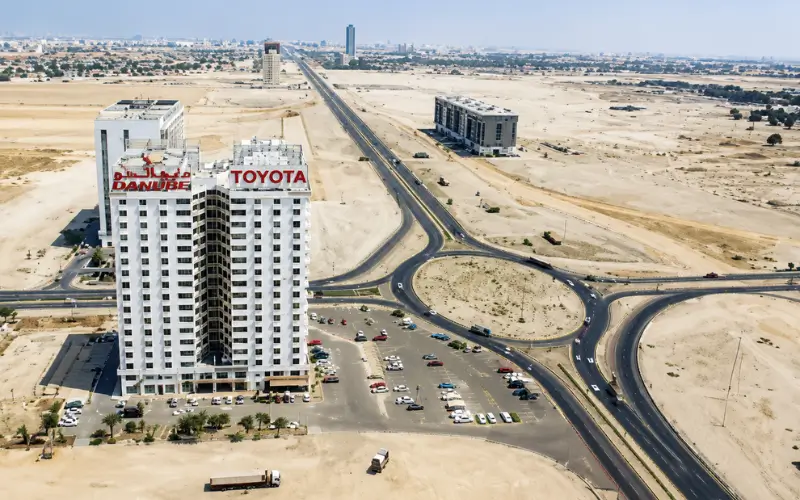
Interchanges: How to Actually Navigate SZR
Sheikh Zayed Road follows the numbered interchanges, while the interchanges for the other named roads are numbered. And locals tend to refer to the interchange number instead of the street name. Here are a couple that are worth knowing:
- The first Interchange (near Defence Roundabout) is a 3-tiered interchange that has been revamped to accommodate more than 16,000 vehicles per hour close to Burj Khalifa and DIFC.
- There are plenty of interchanges around Al Barsha, which is the main hub of access to the Mall of the Emirates.
- 7th Interchange (Jebel Ali) – links forward to the E77 motorway running southwest to Hatta as well as to Jebel Ali’s port and industrial area.
For those on the GPS, it is less important. When you’re being oriented by a call from young Dubai, you can assume their directions are for you to alight at the fourth interchange—no street names are mentioned.
Toll Gates
This is where three of Dubai’s Salik toll gates are located: at Al Barsha, at Al Safa North, and at Al Safa South. A small fault takes out new motorists. Once you maneuver through both the Al Safa gates in the same direction within an hour, Salik will only charge you once and not twice.
Also, charges increase a bit during peak hours. The toll one may be charged for a daily SZR commuter will be higher during the rush hour time of day than off-rush hour. Speed Limits and the 20 km/h Rule
| Toll Gate | Location | Who It Mainly Affects |
| Al Barsha | Near Mall of the Emirates | Al Quoz, Al Barsha, mall traffic |
| Al Safa North | Al Safa / Jumeirah side | Commuters heading toward Downtown |
| Al Safa South | Adjacent gate, same corridor | Same commuters, combined-charge rule applies |
Speed Limits and the 20 km/h Rule
Abu Dhabi has a 20 km/h overspeed tolerance before handing out a fine, whereas Dubai does not specify such a tolerance. With this ssetupthe 120km/h area essentially equates to a 140km speed limit up to the point cameras detect it.
Best Time to Drive on Sheikh Zayed Road
Sheikh Zayed Road is a regular road during the day and night, and for that reason,,n it is better to time the road for the actual time.
- The start of the day’s business takes place from 7–9 AM. Peak hours are when it is heaviest towards Downtown, DIFC, and Business Bay as commuters rush to work.
- Evening rush hours are 5–7 PM. That’s the other direction, where the same individuals travel home to Al Barsha, Marin,, a and more.
- Weekend traffic is lighter in general, but is busier around Dubai Mall, Downtown, and Mall of the Emirates in the late afternoon and evening. These times are the easiest days to travel the corridor, particularly during the middle of the day on weekdays.
Best Metro Stations Near Sheikh Zayed Road
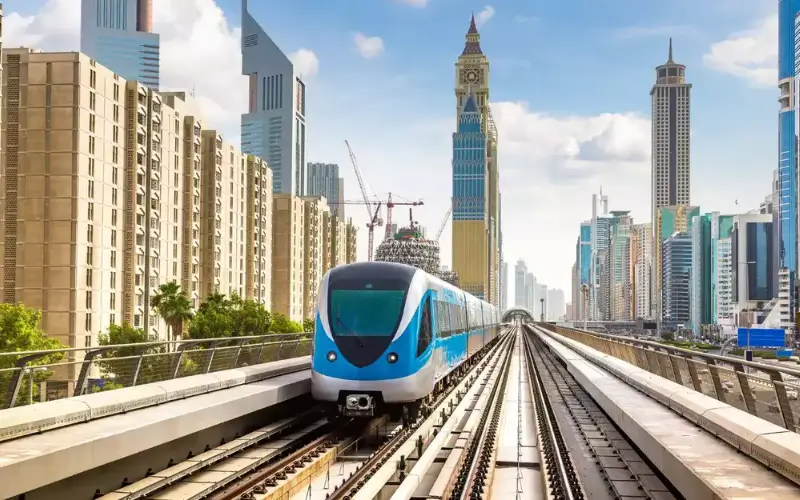
Most of Sheikh Zayed Road is elevated with the Dubai Metro Red Line. There are several stations located directly on the track:
- World Trade Centre Metro — closest station to Dubai World Trade Centre and the Trade Centre Roundabout
- Emirates Towers Metro — steps from Emirates Towers and the Museum of the Future
- Financial Centre Metro — serves DIFC directly
- Business Bay Metro — closest station to the Business Bay canal district
If you are not travelling by car, then visitors will find that journeys can be made to most of the important sites that they visit to view along Sheikh Zayed Road from these four stations.
Things to Do Near Sheikh Zayed Road
In addition to driving through it, Sheikh Zayed Road has a number of the finest sights in Dubai within walking distance or within a metro service.
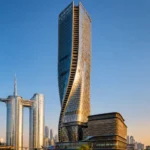
- Visit the Museum of the Future — the torus-shaped landmark near Emirates Towers, one of Dubai’s most photographed buildings.s
- Explore DIFC’s galleries — the financial district doubles as an art hub, with several galleries clustered around Gate Villa.ge
- See the Dubai Mall and Burj Khalifa — reachable directly via the Burj Khalifa/Dubai Mall metro station.
- Take in skyline views — the Downtown pedestrian bridges and Business Bay canal both offer strong vantage points, especially at sunset.t
- Walk Emirates Towers Boulevard — a dining and retail strip connecting the towers to the Museum of the Future
Best Hotels Near Sheikh Zayed Road
- Luxury hotels — concentrated near Downtown and the Trade Centre stretch, close to Burj Khalifa and Dubai Mall, with skyline-facing rooms as the main draw.
- Business hotels — clustered around DIFC and Business Bay, popular with corporate travellers who need quick access to the financial district.
- Budget-friendly stays — more common near Al Barsha and Al Quoz, further from Downtown but still directly on the Re. Line
Neighbourhood Comparison
Apartments near Sheikh Zayed Road are generally priced by proximity to these four zones:
| Area | Relative Rent | Metro Access | Who It Suits |
| Downtown / Trade Centre | Highest | Direct, multiple stations | Finance professionals, short commutes to DIFC |
| Business Bay | High | Direct | Canal-view seekers, newer towers |
| Al Quoz / Al Barasha |
Mid | Direct, several stops | Tech and media workers, more space for the price |
| Dubai Internet City area | Mid | Direct | Employees of nearby tech/media free zones |
| Dubai Marina / JLT | Mid-to-high | Direct | Younger renters, waterfront lifestyle |
Two trends can be mentioned. The units directly facing the highway tend to run on the cheaper end compared to the same units with the opposite highway orientation, just because of the road noise. Typically, units will be on the less expensive side if they do directly face the highway; not for any reason other than road noise, which is something worth considering before signing a lease.
The Trade-Off of Living on Sheikh Zayed Road
| What You Gain | What You Give Up |
| Dubai Metro Red Line access almost anywhere along the corridor | Higher rent than similar units further from SZR |
| Short commute to DIFC, Downtown, Business Bay | Traffic noise on highway-facing floors |
| Walking access to malls, hotels, and dining | Limited street parking; building/mall parking only |
| Skyline views from many towers | Not a pedestrian-friendly street at ground level |
Practical Tips for Driving or Visiting SZR
- Avoid parking in the grounds of the towers if you’re heading to Downtown, DIF, and Trade Centre; opt for the metro instead — parking reaches capacity quickly during the day near these towers during business hours and at major exhibitions.
- If you can, try to head off the peak hours of traffic – around 7 to 9 AM and 5 to 7 PM on weekdays – as it is a time of real time that you can save.
- In case of large-scale events on Dubai World Trade Centre, reserve parking space from the outside, as there may be no available option on the day of the event.
- Do not think that all of “Sheikh Zayed Road” is pedestrianised – the distance between interchanges is highway scale, not neighbourhood scale.
A Few Mistakes People Commonly Make
When people first come to Dubai, they are tempted to think that if a hotel or office is situated on Sheikh Zayed Road, then it must be close to the Burj Khalifa. It can be within walking distance of Barsha or Dubai Marina, or a very long trip away.
Others will take the route between functional “things” that appear close together on a map. Others are going to walk between “things” whose locations are constructed as close together on a map. Actually, in many cases,e,s they are divided by divider strips that don’t allow foot traffic.
However, there are a few drivers caught by the Al Safa toll pairing rule. They get double-charged when they are only double-charged.
Landmarks Worth Knowing Along the Way
Not all of SZR’s landmarks are equally prominent for most residents and visitors, but some are:
- Dubai World Trade Centre — the road’s first skyscraper, completed in 1979, and still Dubai’s main venue for exhibitions like GITEX and Gulfood
- Emirates Towers — one of the earliest twin-tower developments on the road, combining offices, a hotel, and a dining strip known locally as The Boulevard
- DIFC — the region’s main financial free zone, sitting just off the highway near the First Interchange
- Burj Khalifa and Downtown Dubai — the most photographed stretch of the entire corridor, best reached via the Burj Khalifa/Dubai Mall metro station rather than by car
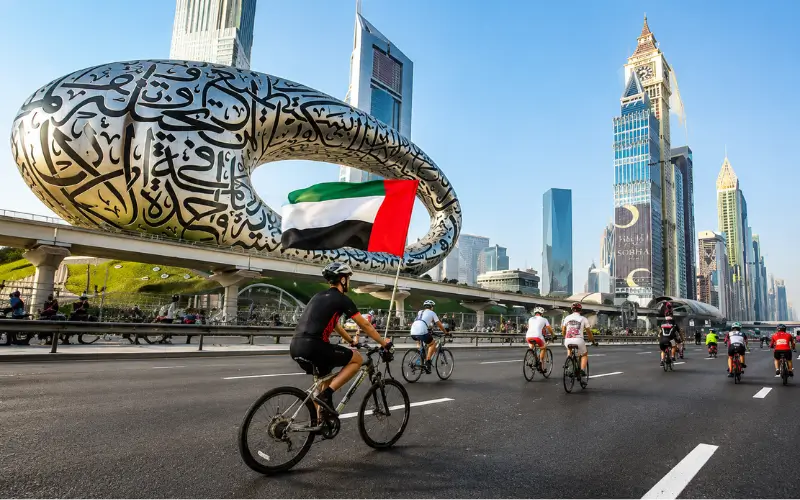
- Museum of the Future — the torus-shaped building near Emirates Towers, now one of the most-visited stops for anyone walking the SZR corridor on foot
Investment Angle: What Matters Beyond the View
Of course, don’t look down on those whose eye values a view overlooking the highway…manuscripts that catch the light quite often give in at Sheikh Zayed Road.
Towers thatate near the Trade Centre and Downtown are more likely to retain value. That’s largely because of its close-knit location among the many workers in the finance and legal sector at DIFC, where commuting is valued above almost everything else.
Always check the ownership and registration with the Dubai Land Department (DLD) before purchase. Additionally, be aware that the monthly service charge on SZR sides facing towers can also be higher than on buildings that don’t face the street.
Dining and Downtime Near the Corridor
The Sheikh Zayed Road is filled with hotels and restaurant chains of all kinds that have dining options. The majority of it can be found in the area around Emirates Towers and the Trade Centre area, which is visible by day and after dark, as the restaurants cater for office workers during the day and a whole other set of visitors after dark.
Dubai Mall and Souk Al Bahar (near Downtown) provide more options. Direct viewing of the fountain shows at the Burj Khalifa offers several spots here, though you have to get a dinner reservation for this to work out if you’re not returning here yourself.
Good Photo Spots Along SZR
There are a number of locations that always give you the classic Dubai skyline photo shoot. BurjKhalifaafasurrounded by several towers, is visible from the pedestrian bridges in and around Downtown. Another reliable walkway is the one that leads between Emirates Towers and the Museum of the Future. As is the Business Bay bridge at sundown, with reflection brought to the sky by the canal.
Where the Road Is Headed Next
Growth is continuing on Sheikh Zayed Road with no signs of a pivot. The skyline is continuously growing with new residential and mixed-use towers close to the Trade Centre and in the Downtown area. The Dubai 2040 Urban Plan is RTA’s longer-term plan. They are a feature of a wider initiative towards sustainable transport; they are oriented towards the creation of dedicated bus and taxi lanes along the corridor.
Also Read: Rolla Square Park,k Sharjah
Frequently Asked Questions
What is Sheikh Zayed Road famous for?
Dubai’s main business and skyline corridor, home to Burj Khalifa, DIFC, Emirates Towers, and the Dubai World Trade Centre.
How many toll gates are on Sheikh Zayed Road?
Three: Al Barsha, Al Safa North, and Al Safa South.
Which metro stations are near Sheikh Zayed Road?
World Trade Centre, Emirates Towers, Financial Centre, and Business Bay Metro stations provide easy access to Sheikh Zayed Road.
Is Sheikh Zayed Road expensive to live on?
Generally, yes, especially near Downtown and DIFC, though prices ease closer to Al Barsha and Dubai Internet City.
What is the speed limit on Sheikh Zayed Road?
Between 100 and 120 km/h, depending on the section, with a 20 km/h buffer before fines apply.